
Products
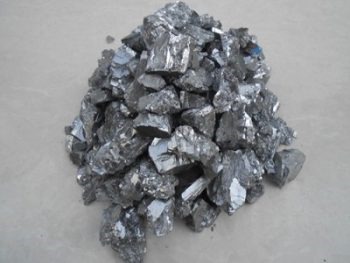 The production of steel is the largest consumer of ferrochrome, especially the production of stainless steel with chromium content of 10 to 20% is the main application of ferrochrome. Stainless steel depends on chrome for its appearance and its corrosion resisting properties. High Carbon Ferro Chrome is most commonly used in specialist applications such as engineering steels. Low Carbon Ferro Chrome is used for trimming additions in stainless steel production as well as other specialist applications. It is added by stainless steel producers in the last stages of production to add precise amounts of chrome without affecting the carbon levels.
 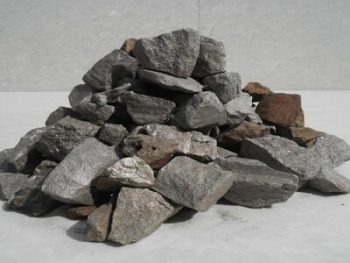 Ferro boron is used in the production of alloy steel and foundry iron as additives, which can improve the quenching degree and mechanical properties in carbon steel and alloys structural steel, the strength of heat-resistivity in heat-resistant steel and heat-resistant alloy steel.
 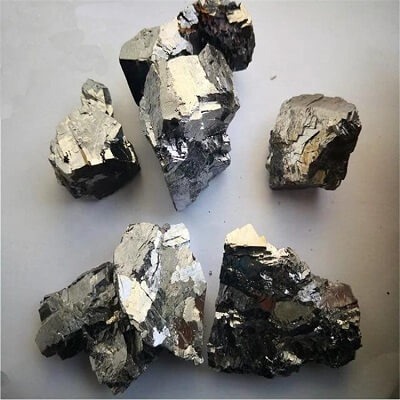 The largest practical application of Ferro Vanadium is in the alloying process of any hardened steel. That steel is then, in turn, used in gears, axles, crankshafts, bicycle frames and other highly critical steel components. Ferro Vanadium forms stable carbides and nitrides that will result in a significant increase in strength.
 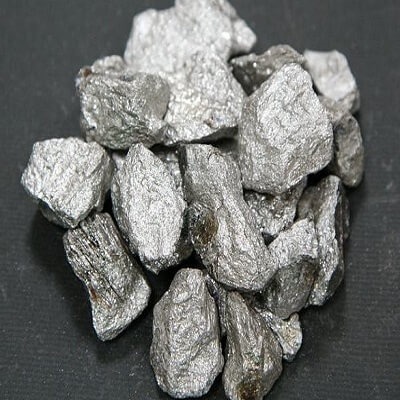 Ferroniobium is the main source for niobium alloying of HSLA (high-strength low-alloy) steel. For alloying with steel the ferroniobium is added to molten steel before casting. Since Ferro Niobium can effectively double the strength and toughness, as well as reduce the weight of the alloy, it is a highly desirable compound. Ferro Niobium is an additive to the production process of amorphous metals, and will impart several desirable properties upon the resulting compound. One of the primary benefits of adding Ferro Niobium to an alloy is in its anti-corrosive properties (better than carbon steel). Additionally, the adding of Ferro Niobium to an alloy can make it more weldable and much stronger.
 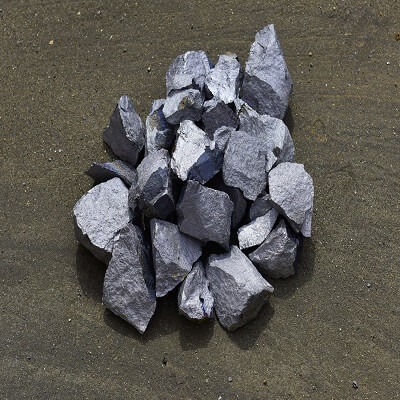 Ferromolybdenum is the main source for molybdenum alloying of HSLA (High Strength-Low Alloy) steel. For alloying with steel the ferromolybdenum is added to molten steel before casting. One of the primary benefits of adding Ferro Molybdenum to an alloy is its hardening properties that makes steel extremely strong and at the same time weldable, as Molybdenum is one of the top 5 melting-point metals. Additionally, the adding of Ferro Molybdenum to an alloy can increase corrosion resistance.
Ferro Silico Manganese is used as a deoxidizer and an alloying element in steel. It can be used as a substitute for Ferro Silicon and Ferro Manganese when added to make different types of steel.
Ferromolybdenum is the main source for molybdenum alloying of HSLA (High Strength-Low Alloy) steel. For alloying with steel the ferromolybdenum is added to molten steel before casting. One of the primary benefits of adding Ferro Molybdenum to an alloy is its hardening properties that makes steel extremely strong and at the same time weldable, as Molybdenum is one of the top 5 melting-point metals. Additionally, the adding of Ferro Molybdenum to an alloy can increase corrosion resistance.
Ferro Silico Manganese is used as a deoxidizer and an alloying element in steel. It can be used as a substitute for Ferro Silicon and Ferro Manganese when added to make different types of steel. 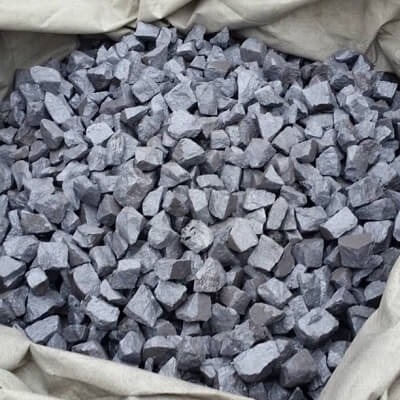 Ferro Silicon is a universal “heat-blocker” used in the production of carbon and stainless steels. This additive is used with other ferro alloys in the deoxidising process of steel, as well as in the production of silicon itself. It is also used in the production of cast iron, as it can accelerate graphitisation. Ferro Silicon replaces the need for ferro manganese, spiegeleisen and calcium silicides in the manufacturing process.
 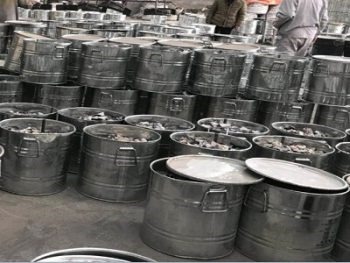 Ferrotitanium is used in steelmaking as a cleansing agent for iron and steel; the titanium is highly reactive with sulfur, carbon, oxygen, and nitrogen, forming insoluble compounds and sequestering them in slag, and is therefore used for deoxidizing, and sometimes for desulfurization and denitrification, also it is is used by stainless steel makers as a stabiliser to prevent chromium carbide forming at grain boundaries and in the production of low carbon steels for sheet production. In steelmaking the addition of titanium yields metal with finer grain structure.
 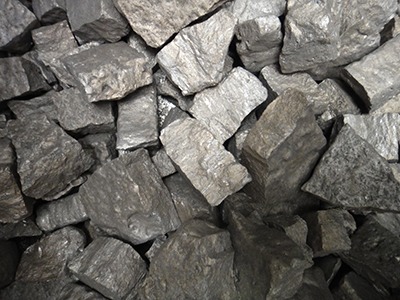 Tungsten (Wolfram) is an important alloying element in high-speed and other tool steels, and is used to a lesser extent in some stainless and structural steels. Tungsten is often added to steel melts as Ferro Tungsten (Ferro Wolfram), which can contain up to 80% tungsten. Ferro Tungsten is a remarkably robust alloy because of its high melting point, wolfram has the second highest melting point after carbon.
 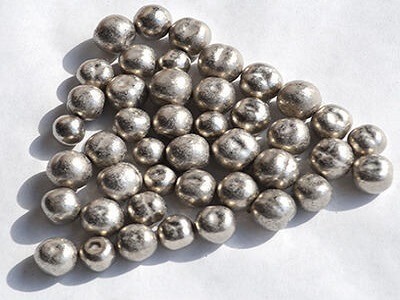 Nickel is used in many specific and industrial products, including stainless steel, alnico magnets, coinage, rechargeable batteries, and special alloys. It is also used for plating and as a green tint in glass. Nickel is preeminently an alloy metal, and its chief use is in the nickel steels and nickel cast irons, of which there are many varieties. One more important detail about Nickel is that it is resistance to corrosion.
 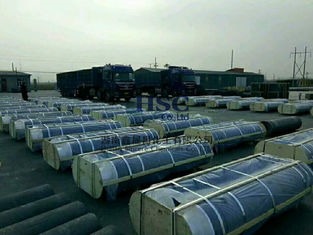 Graphite electrodes serve to transfer the electrical energy from the power supply to the steel melt in the EAF bath. They are typically made using premium petroleum needle coke, coal tar pitch, and some additives,Specification of needle coke for the manufacture of large diameter graphite electrodes , Electrode consumption varies between 1.8 and 9.9 kg/t of liquid steel depending on the process characteristics and electrode quality.Electrodes are classified as regular grade or premium grade on the basis of their physical properties.
 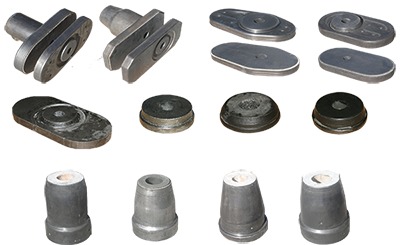 Ideal for handling dry bulk material in gravity flow, dilute phase or dense phase pneumatic conveying applications. slide gates are designed and engineered with two main principals in mind: 1. extend the service life of the valve and 2. perform maintenance without taking the valve out of line. slide gates serve many industries including chemical, cement, coal, food, frac sand, grain, minerals, petrochemical, pharmaceutical, plastics, polymer, rubber and mining.
 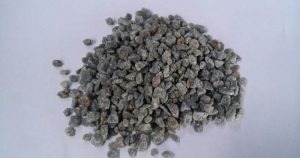 EBT tap hole filler for electrical arc furnaces
Using Olivine as a tap hole filler material can achieve opening rates of 97-100%. Olivine is magnesium iron silicate with the formula (Mg, Fe)2SiO4. It is one of the most common minerals on earth and has been found also on other planets and meteorites. Olivines properties vary depending on the levels of its two main components, forsterite (Fo) and fayalite (Fa). Olivine is named after its olive green colour.
EBT tap hole filler for electrical arc furnaces
Using Olivine as a tap hole filler material can achieve opening rates of 97-100%. Olivine is magnesium iron silicate with the formula (Mg, Fe)2SiO4. It is one of the most common minerals on earth and has been found also on other planets and meteorites. Olivines properties vary depending on the levels of its two main components, forsterite (Fo) and fayalite (Fa). Olivine is named after its olive green colour. 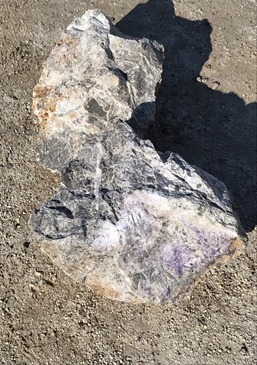 Fluorine has many applications in the metallurgy industry due to its melting point properties, including cast iron and iron alloy production.
 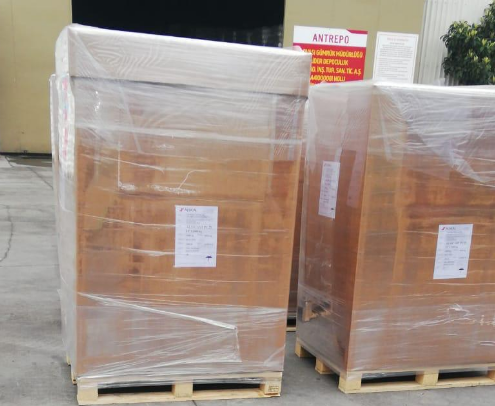 Ingot casting powder have been the first fluxes used to cast steel. Such a pioneering endeavor assumed from very beginning the character of a disrupting innovation due to stepwise improvement introduced to the ingot casting technology. Later these products became parent materials for modern continuous casting powders development.